Alcohol

Alcohol use is one of the biggest threats to the health and safety of Texas kids, and the earlier kids start, the greater the risk. Teens who drink before age 15 are four times more likely to struggle with alcohol problems later in life. Early drinking can affect school work, harm health, and set kids on a dangerous path — but we can stop that from happening.

Learn how alcohol affects the way the brain grows and works.

12.5

is the average age
Texas kids first try alcohol

42%

of 7th—12th graders in Texas
have tried alcohol.

1 in 5

Texas students have used
alcohol in the past month

38%

of Texas 7th—12th graders
say alcohol is easy to get.

When we make it easier for a young person to gain access to a substance, they are more likely to use that substance.

— Nicole Holt, CEO of Texans for Safe and Drug-Free Youth
Social Access

Casey’s story reminds us that underage drinking has devastating consequences—and that we all have a part in prevention.

Most teens get alcohol socially.

When teens get alcohol at parties or from friends, it can seem harmless — but it’s not. Drinking at a young age puts them at risk for alcohol poisoning, unsafe choices, and even long-term health problems.

Our Approach

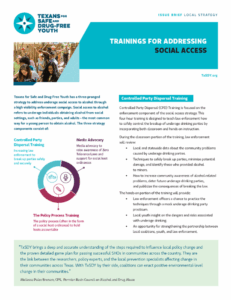
We work to reduce youth social access to alcohol by focusing on three core elements:

  • Effective policies, like social host ordinances, that result in fewer underage drinking parties

  • Consistent law enforcement with tools like Controlled Party Dispersal to safely stop underage parties and keep impaired drivers off the road

  • Media Advocacy that raises awareness of Zero Tolerance Laws and other effective ways to prevent underage drinking

Social Access Resources

Read more about TxSDY’s
social access trainings

Learn more about
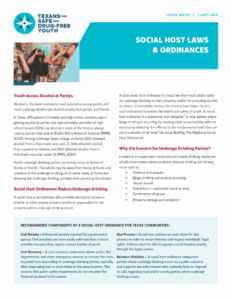
Social Host Ordinances

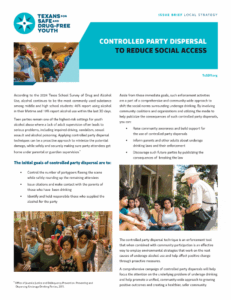
Learn about Controlled Party
Dispersal techniques

Training Session

Contact us for social access
trainings to reduce youth access

Alcopops

Kid-friendly packaging, adult-level risks. 

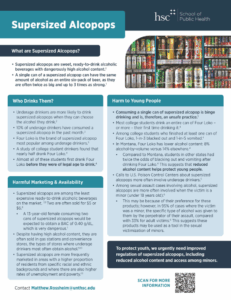
Alcopops are cheap, sweet, and dangerously strong. Their kid-friendly flavors and packaging make them especially appealing to youth, putting our kids at risk for faster intoxication and serious harm.

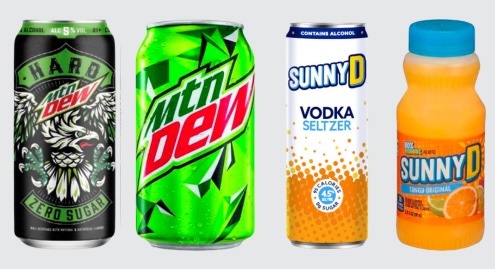
Images of hard mountain dew, which contains alcohol, next to regular mountain dew, and Sunny D Vodka Seltzer next to regular Sunny D. The images illustrate how similar the alcoholic drinks look to the kid-friendly non-alcoholic drinks.

Grab-and-go drinks mimic kid-friendly sodas and teas.

Our Approach

We focus on proven strategies that reduce access to alcopops, such as:

  • Requiring universal ID checks for every alcohol purchase

  • Using electronic ID verification systems

  • Selling liquor-based drinks in liquor stores only

Alcopops Resources

Learn more about alcopops
we’re seeing in Texas

Research on supersized alcopops
from academic experts at UNT.

Help us monitor
alcopops in Texas

TxSDY offers info and
training to help protect kids

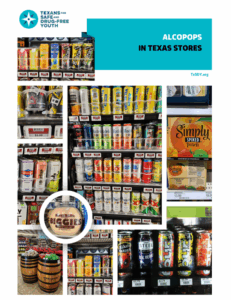
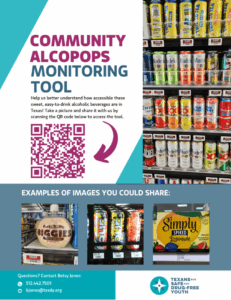
TxSDY has been gathering photos from stores statewide, showing how common alcopops are in local communities.
You can help by snapping pictures in your area and sharing them through our Community Alcopops Monitoring Tool!

Alcohol-to-Go

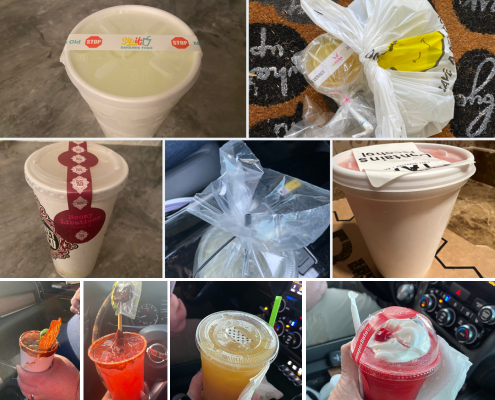
Alcoholic beverages from alcohol-to-go orders are often delivered without
tamper-proof seals. Sometimes, orders are left on doorsteps with no ID checks.

A hidden risk for kids.

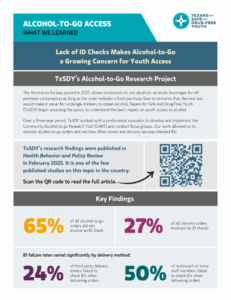
In 2021, Texas made alcohol-to-go permanent, letting restaurants and bars sell drinks for pickup or delivery. But with 65% of orders going unchecked for IDs, kids now have easier access than ever.

Our Approach

We champion practices that make it harder, not easier, for youth to get alcohol. This includes:

  • Updating and improving compliance checks processes to make sure alcohol isn’t sold to minors

  • Ensuring the Texas Alcoholic Beverage Commission has enough funding to perform enforcement duties

  • Developing standard trainings for alcohol-to-go pickup and delivery

  • Setting clear procedures for delivery drivers and staff

Alcohol-to-Go Resources

Alcohol-to-Go Research Snapshot

TxSDY’s alcohol-to-go
research results at a glance.

TxSDY's research article about alcohol-to-go orders in Texas, which was published in published in Health Behavior and Policy Review.

Read TxDY’s published research on
alcohol-to-go orders in Texas.

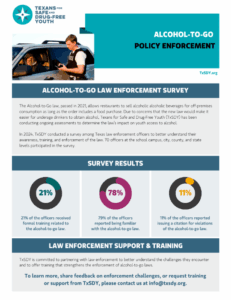
Alcohol-to-Go Policy Enforcement

Learn more about alcohol-to-go
and policy enforcement.

TxSDY offers info and
training to help protect kids

Alcohol & Cancer

A clear connection.

Research shows that alcohol is a risk factor for several types of cancer—including breast, liver, and colon cancer. Every step we take today to reduce alcohol use helps prevent cancer tomorrow and creates a healthier future for all Texans.

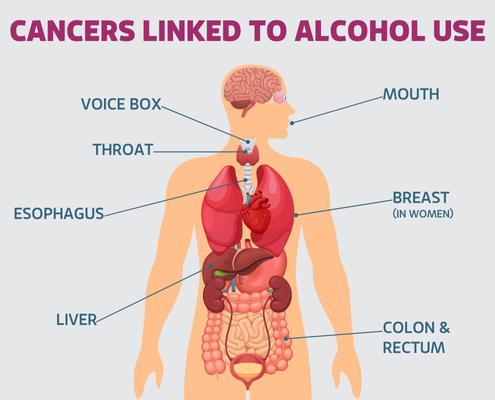
Cancers associated with alcohol include mouth, voice box, throat, esophageal, breast (in women), liver, and colon and rectum

Cancers associated with drinking alcohol include mouth throat, voice box, esophageal, breast, liver, colon, and rectum.

Our Approach

We raise awareness about the relationship between alcohol use and cancer risk, helping people learn that:

  • Alcohol is a known carcinogen and increases the risk of at least seven types of cancer, including breast, liver, mouth, throat, colon, rectum, and esophagus

  • Even small amounts of alcohol can increase cancer risk — there is no safe level of drinking when it comes to cancer prevention

  • Alcohol contributes to about 75,000 cancer cases and 19,000 cancer deaths in the U.S. each year

  • In Texas, alcohol contributes to nearly 900 cancer deaths every year

  • Breast cancer is the most common alcohol-related cancer among women

  • Reducing alcohol use can lower cancer risk at any age, and the benefits begin almost immediately

Alcohol & Cancer Resources

NCI Alcohol and Cancer Information

More info from the
National Cancer Institute

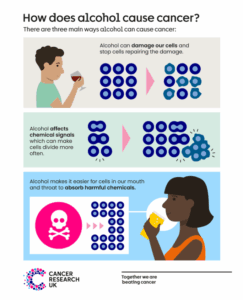
Cancer Research UK Resources

Check out Cancer Research UK’s
resources on alcohol and cancer

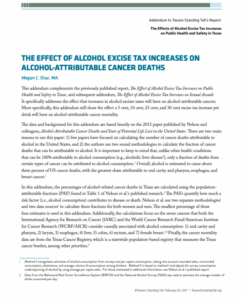
Addendum: The effect of alcohol excise tax increases on alcohol-attributable cancer deaths.

Learn how alcohol prices
affect cancer deaths in Texas

Contact us for training or more
info about alcohol and cancer

Excise Taxes

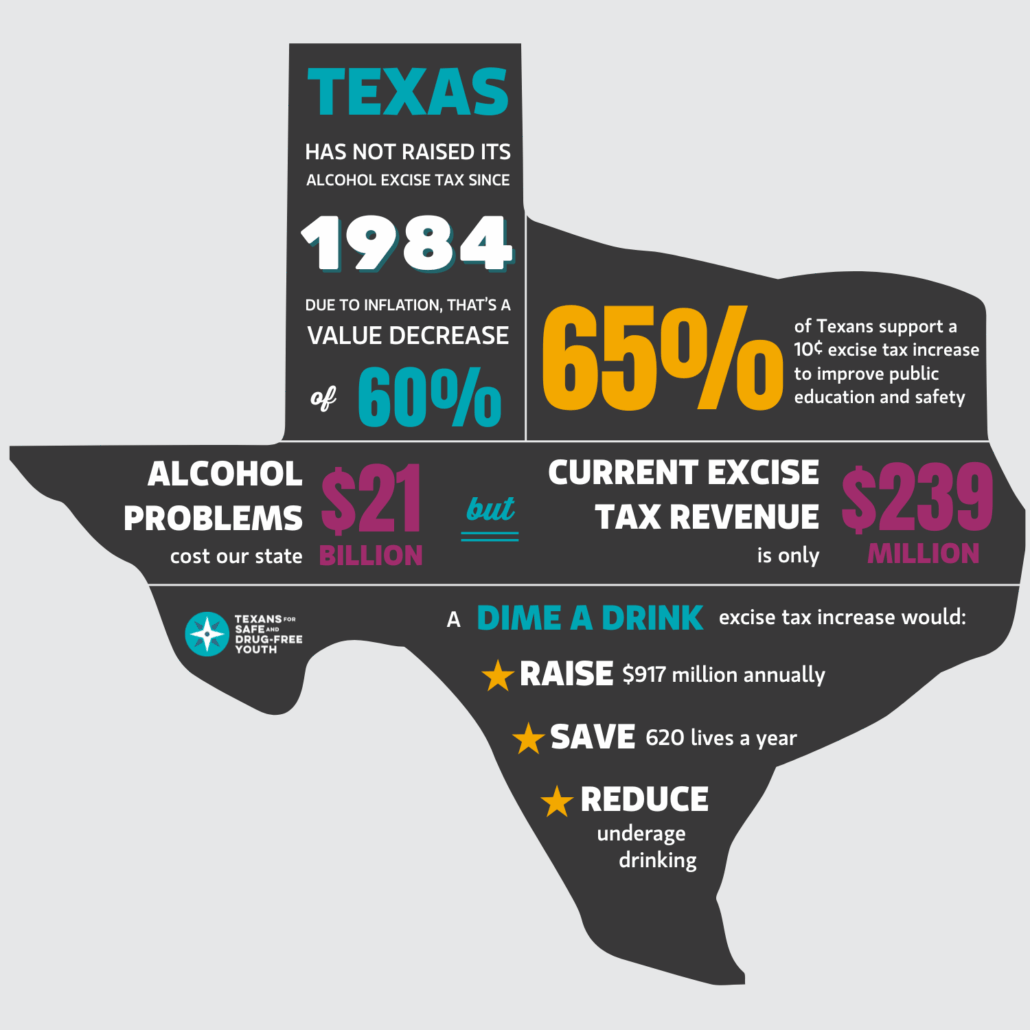
An image with the state of Texas that provides data about the impact of alcohol excise taxes in Texas. The excise tax hasn't been raised since 1884 and has lost 60% of its value due to inflation. Increasing it a dime a drink would save lives and reduce underage drinking.

When drinks cost less, kids drink more.

In Texas, alcohol excise taxes haven’t changed since 1984, making alcohol cheaper and easier for kids to get. We know even a small price increase can make a difference—every dime counts when it comes to keeping our kids safe.

Our Approach

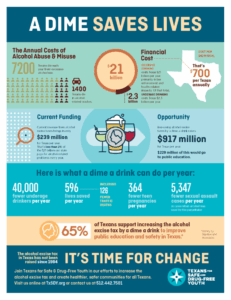
We advocate for increasing alcohol excise taxes by 10¢ a drink. Every year, a dime a drink increase would:

  • Save 620 lives

  • Prevent close to 90 cancer deaths

  • Reduce sexual assaults by more than 5,000

  • Prevent more than 360 teen pregnancies

  • Raise over $900 million for the state

Excise Tax Resources

Check out or alcohol
excise tax infographic

Read our full alcohol
excise tax report

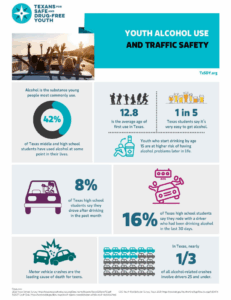
Youth Alcohol Use and Traffic Safety One-Pager

Learn more about the impact
of underage drinking

TxSDY offers info and
training to help protect kids

College Campuses

Keeping college safe and smart.

Heading off to college is an exciting time for young Texans—but it also comes with risks. Alcohol is the most widely used substance on campuses and can lead drunk driving, sexual assault, and other consequences that last long after graduation.

College is a big transition for students—and parents. By keeping the conversations going and supporting effective campus prevention, you can still play a key role in your student’s safety and success.

Our Approach

Our innovative Screening and Brief Intervention (SBI) program is a primary prevention tool for campuses. Students who participate in SBI say they:

  • Drink less overall

  • Engage in fewer risky behaviors

  • Experience fewer negative consequences if they do drink

College Resources

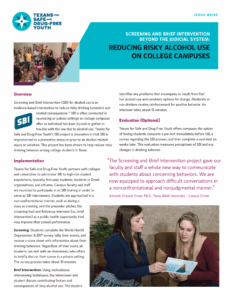
Learn about reducing risky
drinking on college campuses

Screening and Brief Intervention
is a key prevention tool

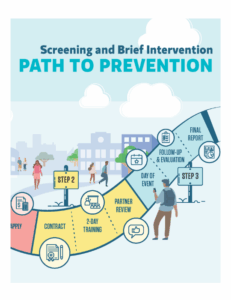
Read about the process
for TxSDY’s SBI program

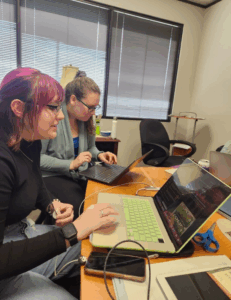
Work with TxSDY on
campus prevention

College should be about learning, not risky drinking. Our online tool lets you explore Texas colleges’ alcohol policies and see where they could be stronger—helping you make informed choices to keep students safe.

Youth Engagement

Youth Academies bring young people and community leaders together through hands-on, day-long events where youth can participate in fun, purposeful activities; build leadership skills; and help create real change in their communities.

Empowering youth and protecting futures.

Underage drinking can have serious and far-reaching consequences, from impaired driving to assault and suicide. Creating opportunities for youth and adults to work side by side makes our communities safer and gives young people a voice in shaping a healthier future.

Our Approach

Adults and youth working together creates positive change in communities. Five strategies for active engagement include:

  • Acknowledging that youth DO care

  • Communicating clearly and setting expectations

  • Sharing authority and responsibilities

  • Providing training and mentoring

  • Being nice and encouraging

Zero Alcohol for Youth Resources

Zero Alcohol for Youth Academy Flyer

Learn more about hosting
an Academy in your community

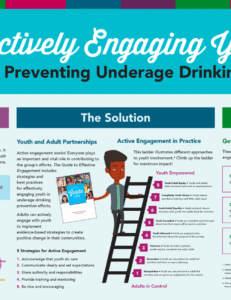
Effectively Engaging Youth

Learn more about
effective youth engagement

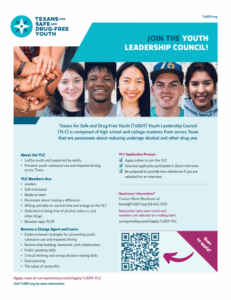
Encourage a youth to join the
Youth Leadership Council
Contact us to host a youth
training or Academy!

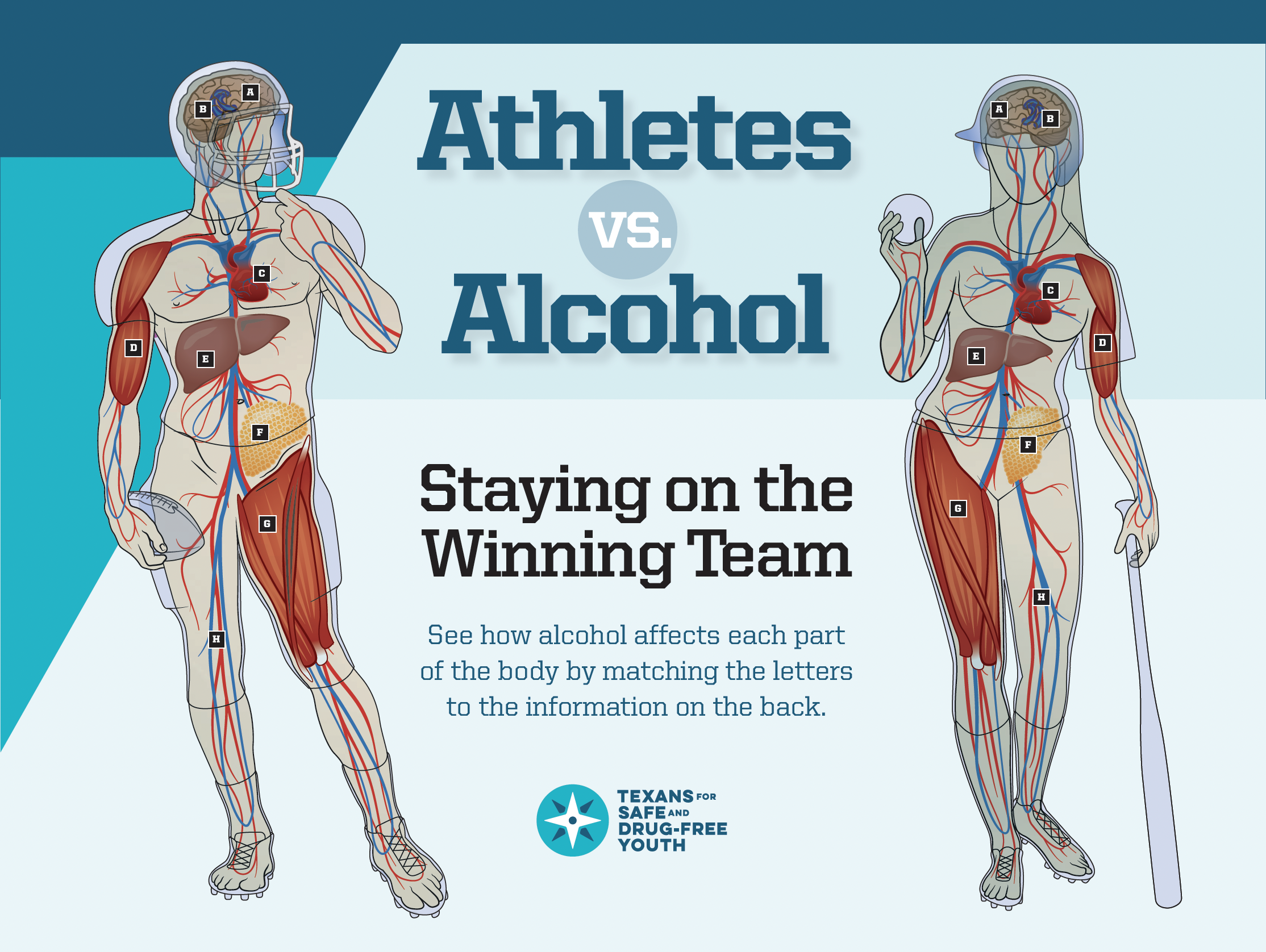
Athletes vs. Alcohol Flyer (English)

Strong bodies and sharp minds are key to success—and alcohol gets in the way. Our Athletes vs. Alcohol poster helps youth understand how drinking harms their growing brains and bodies. By building awareness of these impacts, we can discourage underage drinking and support healthier choices for young people

What You Can Do

Your kids are listening more than you think. Talk early and talk often—the sooner you talk about alcohol, the safer your child will be.

Upcoming Events

error: Content is protected !!